
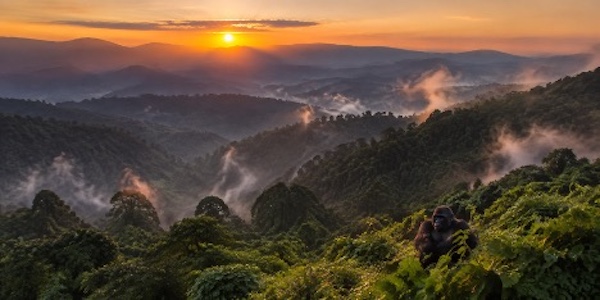
Bwindi Impenetrable National Park lies in the mountainous far southwest of Uganda, close to the borders with Rwanda and the Democratic Republic of Congo. Its steep, folded ridges are covered by one of Africa’s oldest and most biologically diverse rainforests. Seen from a distant hillside, Bwindi appears as a dark green island rising through cultivated valleys, with mist drifting between the trees and clouds settling on the higher ridges.
The word “Bwindi” is commonly associated with darkness or a place that is difficult to pass through. The name suits a forest filled with tangled vines, giant ferns, moss-covered trunks and a dense canopy that sometimes blocks the midday sun. Yet Bwindi is not simply a difficult wilderness. It is a living refuge where mountain gorillas, forest elephants, chimpanzees, monkeys, butterflies and hundreds of bird species survive within a relatively small area.
The national park covers approximately 321 square kilometres and protects both lowland and montane forest at elevations ranging from roughly 1,160 to 2,607 metres. UNESCO inscribed it as a World Heritage Site in 1994 because of its exceptional biodiversity and importance to threatened species. The forest contains more than 160 tree species and over 100 species of ferns, in addition to its extraordinary variety of mammals, birds and butterflies. UNESCO describes Bwindi’s outstanding natural value as arising from this remarkable concentration of biodiversity.
Bwindi is best known for mountain gorilla trekking. Uganda Wildlife Authority estimates that the park protects approximately 459 mountain gorillas—close to half of the world’s surviving wild population. The significance of meeting them extends beyond the photograph most visitors hope to capture. A gorilla trek brings people into an ancient forest, introduces them to the work of trackers and conservationists, and reveals how the survival of wildlife is tied to the wellbeing of neighbouring communities. Uganda Wildlife Authority’s Bwindi overview provides current park information.
The destination suits wildlife enthusiasts, birdwatchers, hikers, photographers, honeymooners, solo travellers and couples seeking a meaningful nature experience. Families can also enjoy Bwindi, although children must be at least 15 years old to participate in gorilla trekking. Older visitors and people with limited mobility should not automatically dismiss the experience: porters, walking sticks and prearranged sedan-chair teams can make some forest activities more accessible.
Bwindi rewards travellers who resist the temptation to rush. Gorilla trekking may be the reason for coming, but the destination’s soul is also found in birds calling before sunrise, village footpaths, cultivated terraces, evening fires, forest waterfalls and conversations with people whose lives are intertwined with the park.
Quick Facts About Bwindi
| Essential fact | Visitor information |
| Location | Southwestern Uganda, near Kabale, Kanungu and Kisoro |
| Protected area | Approximately 321 square kilometres |
| UNESCO status | Natural World Heritage Site since 1994 |
| Main visitor sectors | Buhoma, Ruhija, Rushaga and Nkuringo |
| Elevation | Approximately 1,160–2,607 metres |
| Population | No permanent civilian population lives inside the protected park; numerous Bakiga and Batwa communities live around it |
| Main languages | Rukiga and Rufumbira locally; English and Swahili are also used |
| Currency | Uganda shilling (UGX) |
| Time zone | East Africa Time, UTC+3 |
| Climate | Cool, humid equatorial highland climate with rain possible throughout the year |
| Main international gateway | Entebbe International Airport |
| Closest domestic airstrips | Kihihi for the northern side and Kisoro for the southern side |
| Famous wildlife | Mountain gorillas, chimpanzees, forest elephants, black-and-white colobus monkeys and Albertine Rift birds |
| Minimum gorilla-trekking age | 15 years |
| Standard gorilla encounter | Up to one hour after locating the assigned gorilla family |
| Gorilla habituation encounter | Up to four hours with a semi-habituated family, normally in the southern part of Bwindi |
| Electricity | 240 volts, 50 Hz; British-style Type G sockets |
| Emergency park contact | Uganda Wildlife Authority operates a toll-free line at 0800 100 960 |
Bwindi is a national park rather than a single town. Visitors must therefore pay close attention to the sector printed on their gorilla permit. Buhoma, Ruhija, Rushaga and Nkuringo have separate briefing points and are not interchangeable. Driving from the northern side to the southern sectors can take several hours, particularly when roads are wet. Accommodation should be booked near the correct trailhead.
Under the current tariff structure, gorilla-tracking permits are generally priced according to residency category. The commonly published rates are USD 800 for foreign non-residents, USD 700 for foreign residents, USD 500 for visitors in the Rest of Africa category and UGX 300,000 for East African citizens. Uganda introduced discounted permits for selected low-season months—April, May and November—in 2026. Rates and eligibility can change, so travellers should confirm them on the official UWA tariff page before paying.
Why Visit Bwindi?
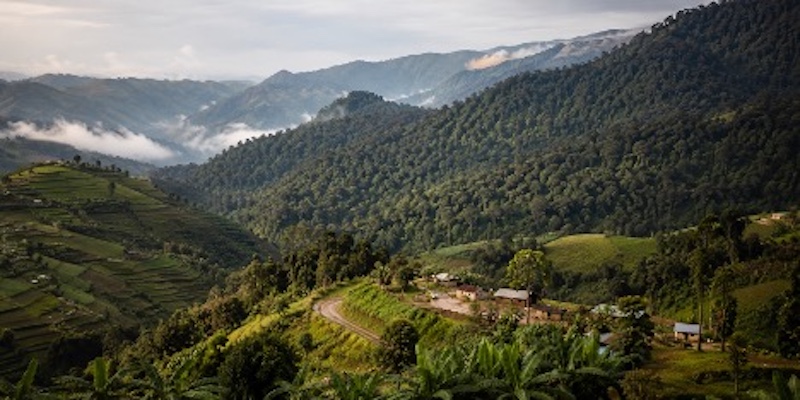
The strongest reason to visit Bwindi is the possibility of meeting wild mountain gorillas. Few wildlife experiences feel as intimate. After hours of walking, the trackers may signal that the family is nearby. Voices become softer, walking sticks are put down, cameras are prepared and the forest suddenly seems to hold its breath. A silverback may sit with the composure of an old ruler while youngsters climb, tumble and test branches above him. A mother may cradle an infant against her chest. The encounter is controlled and time-limited, but it frequently changes how visitors think about intelligence, kinship and the value of wilderness.
Bwindi is also one of East Africa’s great forest-birding destinations. More than 350 bird species have been recorded in the wider park area, including numerous Albertine Rift endemics and range-restricted species. Birders search for African green broadbill, Shelley’s crimsonwing, short-tailed warbler, handsome francolin, yellow-eyed black flycatcher, Rwenzori batis, regal sunbird and Grauer’s swamp warbler. The Ruhija sector and Mubwindi Swamp trail are especially valuable for experienced birdwatchers.
The scenery is another attraction. Bwindi is not an open savannah where animals can be seen from a vehicle. It is a landscape of immersion. Visitors walk beneath a layered canopy, cross streams, climb ridges and look across valleys patterned with tea, bananas and small farms. In the south, the Virunga volcanoes can appear beyond the cultivated highlands on a clear day.
Bwindi offers a human story as compelling as its wildlife. The park is bordered by Bakiga communities with strong agricultural traditions and by Batwa families whose ancestors lived as forest hunter-gatherers. Responsible community experiences can introduce visitors to local food, medicinal plants, crafts, music and farming. These visits are most valuable when they are community-led, fairly paid and presented with dignity rather than turning poverty or cultural displacement into entertainment.
Another reason to visit is the park’s scale and atmosphere. Bwindi feels intimate compared with vast savannah reserves. Lodges are generally small, guides often know the surrounding communities personally, and visitors can hear insects, frogs and birds from their rooms. The experience is less about collecting a long list of animals and more about entering one complex ecosystem.
Bwindi also combines well with other destinations. Queen Elizabeth National Park and its Ishasha sector offer game drives and the possibility of seeing tree-climbing lions. Lake Bunyonyi provides quiet boat trips and relaxation. Mgahinga Gorilla National Park offers golden monkey tracking and volcanic hiking. Travellers arriving through Rwanda can combine Bwindi with Kigali, while longer Ugandan journeys can continue to Kibale, Lake Mburo or Murchison Falls.
What distinguishes Bwindi from competing gorilla destinations is the range of trekking sectors, accommodation categories and forest experiences. Uganda’s permit price is generally lower than Rwanda’s standard gorilla permit, while Bwindi offers a larger network of habituated families and, subject to availability, a specialised gorilla habituation experience.
Best Places to Visit
Buhoma Sector
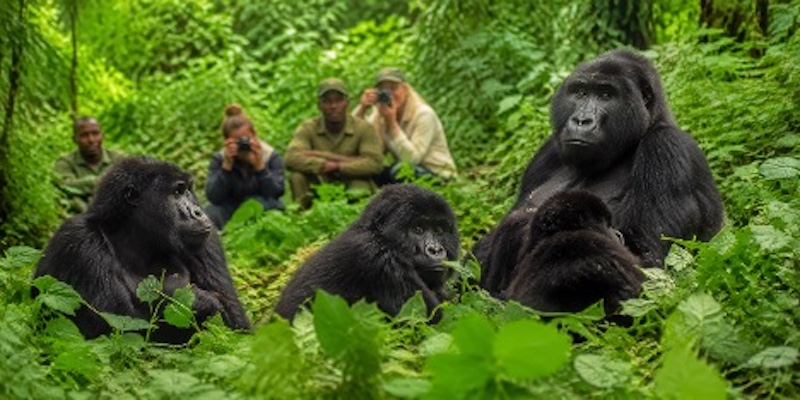
Buhoma lies on Bwindi’s northern side and is the park’s oldest and most established tourism sector. Uganda’s first habituated gorilla family was opened to visitors here in 1993. The area now has a broad selection of luxury, midrange and budget accommodation, a community hospital, craft outlets, cafés and several nature trails.
Buhoma is convenient for travellers flying into Kihihi Airstrip and for those approaching from Queen Elizabeth National Park’s Ishasha sector. The transfer from Kihihi normally takes about one and a half to two hours, depending on the vehicle, road and weather.
Besides gorilla trekking, visitors can walk the Munyaga River trail, explore the waterfall trail or arrange birding and community visits. The forest paths reveal monkeys, butterflies, tree ferns and medicinal plants, even when larger mammals remain hidden. Allow at least two nights in Buhoma: one for arrival and briefing preparation, and another after the trek. Three nights are better if a forest walk or cultural experience is included.
Ruhija Sector
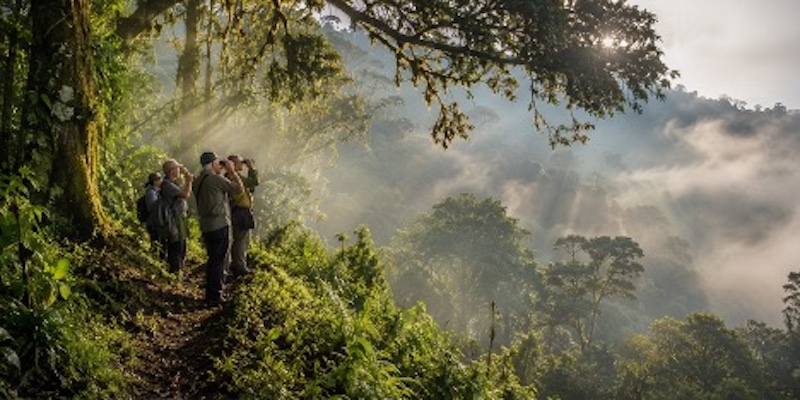
Ruhija occupies the eastern, higher-altitude side of Bwindi. Its cool climate, quiet roads and mature montane forest create one of the park’s best environments for birding. It is less built-up than Buhoma, making it suitable for travellers seeking an undisturbed forest atmosphere.
The famous Mubwindi Swamp trail begins in this region. This demanding full-day excursion descends through beautiful forest to a high-altitude wetland where specialised birds may be found. The trail is particularly attractive to serious birdwatchers seeking the African green broadbill and other Albertine Rift species. It involves steep gradients and can become muddy, so good fitness, waterproof footwear and an early start are important.
Ruhija also offers gorilla trekking and guided forest walks. It can be reached from Kabale and is linked to Buhoma by a scenic forest-edge road, but travellers should avoid judging the journey by distance alone. The rough surface, bends and wildlife sightings can make a short-looking route slow.
Rushaga Sector
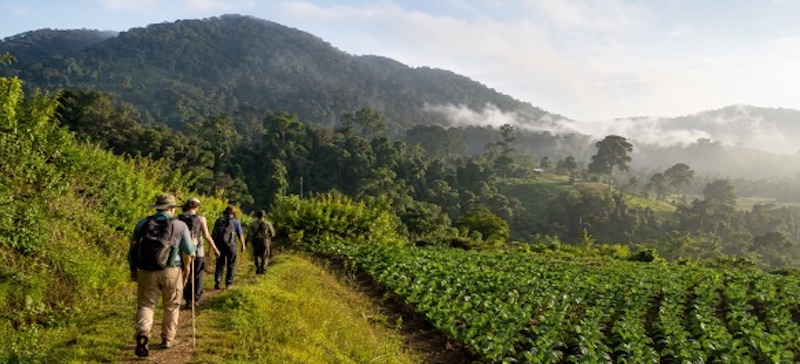
Rushaga lies in southern Bwindi and is accessed most conveniently from Kisoro. It generally offers a comparatively high number of gorilla permits because several habituated families range within the sector. This makes it useful for travellers whose preferred dates are unavailable elsewhere, though permits should still be booked early.
Rushaga is also associated with Bwindi’s gorilla habituation experience. Instead of spending only one hour with an already habituated family, a small number of visitors accompany researchers and trackers to a family still becoming accustomed to carefully controlled human presence. Once the gorillas are located, participants may have up to four hours with them. The day can be long and physically demanding, but it offers deeper insight into gorilla behaviour, identification and conservation work.
The surrounding landscape includes steep farms, forest panoramas and views towards the Virunga highlands. Travellers should stay close to Rushaga’s briefing point rather than attempting an early transfer from Buhoma.
Nkuringo Sector
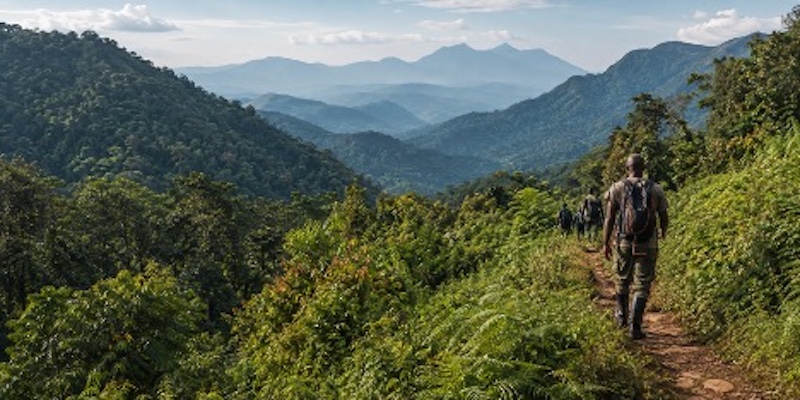
Nkuringo stands on a dramatic ridge along Bwindi’s southwestern edge. The surrounding hills offer some of the destination’s most memorable views, particularly when the Virunga volcanoes emerge through the haze. The sector appeals to hikers, photographers, honeymooners and visitors who value quiet landscapes.
Gorilla treks in Nkuringo can be physically challenging because the terrain is steep and reaching a family may involve a long descent followed by a demanding climb back to the ridge. The reward is an adventurous trek through beautiful forest. Visitors should hire a porter at the briefing point even if they normally carry their own daypack. Porters reduce fatigue on slippery slopes and their earnings directly support households around the park.
Nkuringo can also be combined with community walks and the historic route across Bwindi towards Buhoma, when conditions and park arrangements permit. Travellers should set aside at least two nights, preferably three, to absorb the location rather than treating it as a sleeping stop.
The Ivy River and Forest-Crossing Trails
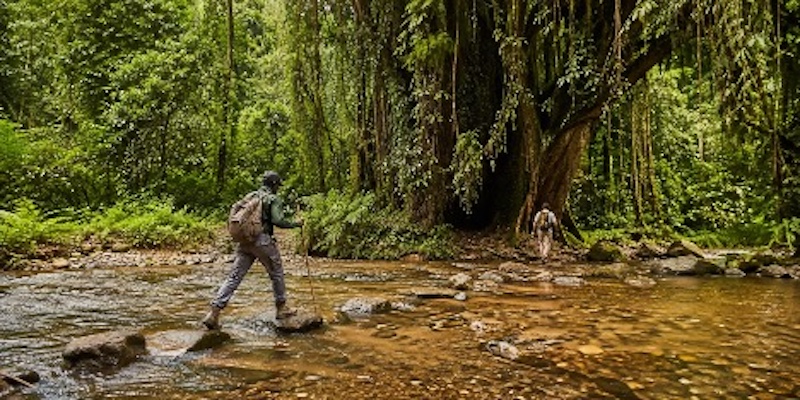
Bwindi’s guided trails provide a fuller understanding of the park than a gorilla trek alone. The Ivy River route traditionally links parts of the northern and southern landscape, passing through forest, riverside habitat and community areas. Availability, starting points and transfer arrangements should be checked with UWA or a licensed operator.
These longer walks suit active travellers who want to hear the forest’s smaller stories: hornbills crossing an opening, monkeys shaking branches, animal tracks in the mud, lichens on old trees and the distant crash of an unseen forest elephant. A ranger guide is required for walks inside the protected area.
Munyaga River and Waterfall Trails
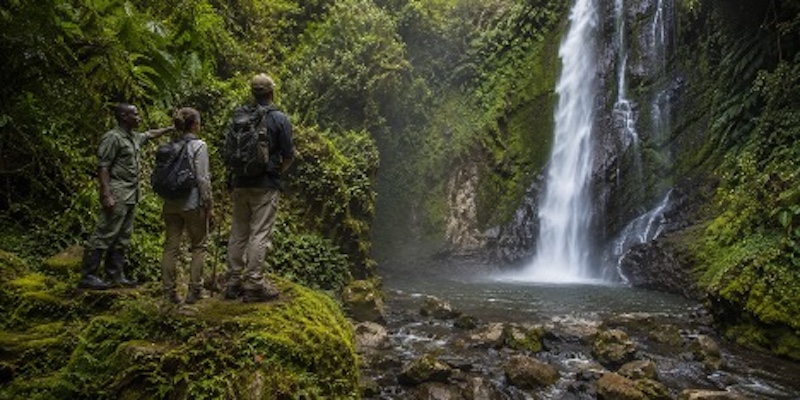
The Buhoma trail system offers accessible ways to experience Bwindi without tracking gorillas. The Munyaga River trail follows forest and stream habitat where visitors may encounter primates, birds and butterflies. Longer waterfall excursions lead deeper into the forest to cascades framed by dense vegetation.
These walks can take a few hours, depending on the selected route and pace. They are excellent for visitors under the gorilla-trekking age, companions who do not have permits, and travellers staying an extra day. Even here, rain protection and sturdy shoes are advisable.
Buhoma Village and Community Projects
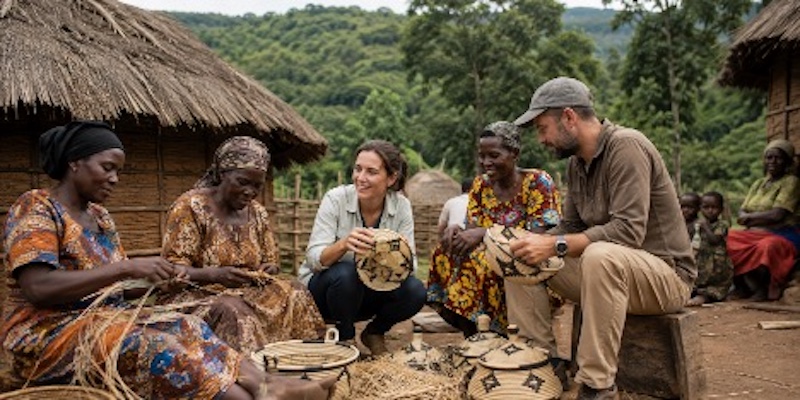
The settlement around Buhoma contains craft workshops, community organisations, coffee projects, cultural performers and small businesses that developed alongside conservation tourism. A well-organised community walk may include demonstrations of banana-beer production, weaving, farming, cooking or traditional plant use.
Visitors should choose experiences that explain how fees are distributed. Buying directly from artisans and tipping performers appropriately helps ensure that tourism benefits extend beyond lodge owners and international operators.
Lake Mutanda and Lake Bunyonyi
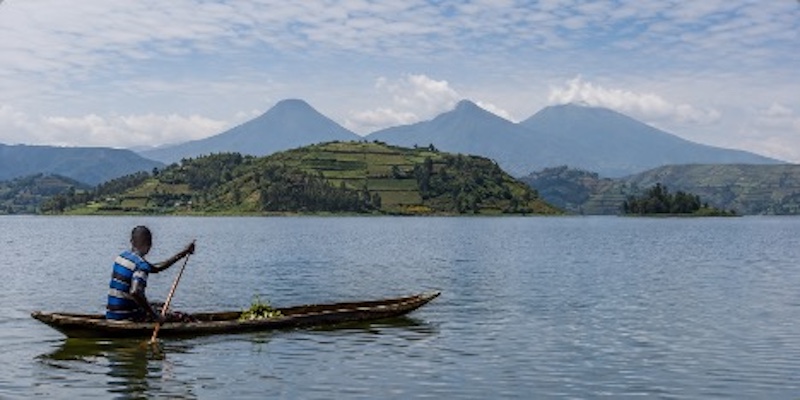 Neither lake lies inside Bwindi, but both complement a forest visit. Lake Mutanda, near Kisoro, is especially convenient for Rushaga and Nkuringo. Its islands, papyrus edges and volcanic background create opportunities for canoeing, birdwatching and photography.
Lake Bunyonyi, near Kabale, is popular for relaxation before or after a trek. Accommodation ranges from simple island camps to comfortable hillside resorts. Swimming is offered in some places, but visitors should seek current local guidance on water safety and never swim alone or after drinking alcohol.
Top Things to Do
Gorilla trekking remains Bwindi’s defining activity. The day normally begins with registration and a ranger briefing. Visitors are assigned to a gorilla family and grouped according to permit allocation, operational considerations and sometimes fitness. Trackers enter the forest earlier to locate the families, but the trek may still last from a short morning to most of the day because gorillas move freely.
Once a family is located, standard permit holders spend up to one hour observing it. Visitors must follow ranger instructions, keep the required distance whenever terrain allows, avoid eating near the gorillas and never trek when suffering from a contagious illness. Gorillas are vulnerable to human respiratory infections.
The gorilla habituation experience is designed for travellers wanting a longer and more research-oriented encounter. It costs significantly more and requires patience, good fitness and respect for animals that may be less relaxed around people than fully habituated families.
Birdwatching is the park’s great second act. Casual visitors can enjoy turacos, sunbirds, flycatchers and hornbills around lodge gardens and forest edges. Specialist birders should dedicate two or more full days, preferably with a guide who recognises calls and knows seasonal feeding areas. Ruhija is particularly important, although Buhoma and the southern sectors also offer productive birding.
Guided nature walks introduce the forest’s ecology beyond its famous primates. Rangers explain tree species, fungi, insects, animal signs and the role Bwindi plays as a water catchment. Waterfall walks are refreshing during warmer periods, while ridge and forest-crossing trails offer more physical challenges.
Community experiences can include village walks, basket weaving, coffee processing, cultural performances and home-hosted meals. The most insightful programmes allow genuine conversation and avoid presenting communities as static relics of the past. The people around Bwindi use smartphones, attend schools, run businesses and negotiate modern conservation challenges while maintaining important cultural traditions.
Photography is rewarding but demanding. Light beneath the canopy can be low, subjects may move quickly and rain can arrive without warning. A camera with good low-light performance, a medium telephoto lens and protection against moisture is useful. Flash photography around gorillas is prohibited.
Visitors can also enjoy coffee tours. Southwestern Uganda produces Arabica and Robusta coffee, and small community projects demonstrate harvesting, drying, roasting and grinding. Sharing a freshly prepared cup while looking towards the forest turns an everyday drink into a story about soil, labour and livelihood.
Suggested Itineraries
One-Day Visit
A genuine one-day visit is practical only for travellers already staying close to the correct Bwindi sector. Arriving from Kampala, Entebbe or Kigali and trekking on the same day is neither realistic nor responsible.
Begin with an early breakfast and arrive at the UWA briefing point before the stated registration time, commonly around 7:00–7:30 a.m. Attend the briefing, meet the ranger team and hire a porter. Enter the forest for gorilla tracking. Carry lunch and sufficient drinking water because the return time cannot be predicted.
After returning, rest at the lodge, clean muddy boots and enjoy a late lunch or early dinner. If time and energy permit, visit a nearby craft centre or take a gentle community walk before sunset. Avoid scheduling a long road transfer immediately after trekking.
Two-Day Visit
On the first day, travel from Queen Elizabeth National Park, Kabale, Kisoro, Kigali or a nearby airstrip to the correct Bwindi sector. Check in by mid-afternoon and attend a community experience, coffee tour or short guided walk. Use the evening to prepare clothing, water, lunch, gloves and camera equipment.
On the second day, complete the gorilla trek after the morning briefing. Return to the lodge for a shower and meal. Visitors continuing elsewhere should travel only if there is sufficient daylight and the next destination is nearby. A second night is safer and more enjoyable, especially after a difficult trek.
Three-Day Visit
Day one should be devoted to arrival and orientation. Drive or fly into the region, settle into a lodge and spend the afternoon on a village, craft or coffee experience. Watch the light fade across the hills and sleep early.
Day two is the gorilla-trekking day. Hire a porter, follow the ranger team into the forest and allow the encounter to unfold without constantly looking through a camera. After returning, relax at the lodge. Many visitors find that quiet time is valuable after such an emotionally powerful experience.
On day three, take a guided forest walk or dedicated birding excursion. In Buhoma, consider a waterfall trail; in Ruhija, choose birding or a portion of the Mubwindi route; in the south, enjoy a community walk or transfer to Lake Mutanda. Depart later in the day or stay a fourth night if the next journey is long.
Best Time to Visit
Bwindi can be visited throughout the year because it is an equatorial rainforest and gorillas do not migrate seasonally. Rain is possible in every month. The practical question is not whether it will rain, but how much rain a visitor is prepared to handle.
June through August and December through February are commonly considered the drier periods. Trails may be firmer, road journeys easier and photography more comfortable. These months are popular, so permits and desirable lodges can sell out well in advance. Dry does not mean rain-free; a waterproof jacket should always be carried.
March through May and around October to November are generally wetter. Forest trails become muddy, steep roads require greater care and clouds can limit distant views. However, the forest is extraordinarily green, visitor numbers may be lower, birds are active and some lodges offer seasonal values.
April, May and November have recently been included in Uganda’s discounted low-season gorilla-permit programme. Foreign non-resident permit prices have been advertised at USD 600 during eligible periods rather than the usual USD 800, with reductions for other categories as well. Because implementation details can change, travellers must verify dates, categories and availability with UWA before building a budget.
Birdwatchers may value wetter months because breeding activity, food availability and migratory movements can improve particular sightings. Photographers may prefer the softer light and dramatic mist of the rainy season, provided they protect their equipment.
December and the Easter period can be busy because of international tourism and domestic holidays. Travellers should reserve rooms, vehicles and permits early and expect increased traffic on major roads.
How to Get There
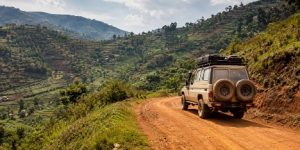
Most international visitors enter Uganda through Entebbe International Airport. The road journey from Entebbe or Kampala to Bwindi generally takes nine to eleven hours, depending on the sector, traffic, roadworks, weather and rest stops. The common route passes through Masaka, Mbarara and the southwestern highlands before branching towards Kabale, Kisoro, Kanungu or Kihihi.
The long drive is worthwhile for travellers with time. It reveals the transition from Lake Victoria’s basin to cattle country, banana-growing hills and the terraced landscapes of Kigezi. Many itineraries break the journey at Lake Mburo National Park, Mbarara or another suitable stop.
Domestic flights save considerable time. Scheduled or charter aircraft connect Entebbe with Kihihi and Kisoro. Kihihi is usually the best airstrip for Buhoma and may also serve Ruhija, while Kisoro is generally more convenient for Rushaga and Nkuringo. Transfers are still required from the airstrip to the lodge. Aerolink states that its Bwindi services can reach nearby airstrips in a little over an hour, but current schedules and baggage limits should be checked directly with the airline. Aerolink’s current Bwindi flight information explains the available approach.
Travellers may also approach through Kigali, Rwanda. The road journey from Kigali to southern Bwindi can take approximately four to six hours, including border procedures, though delays are possible. Common crossings include Cyanika, near Kisoro, and Katuna/Gatuna, near Kabale. Visitors need appropriate permission to enter both countries and must not assume that a single-entry Ugandan visa permits re-entry after visiting Rwanda.
There is no railway or navigable water route to Bwindi. Public buses travel from Kampala to Kabale, Kisoro or towns closer to Kanungu, but they do not provide convenient transport to every lodge or trailhead. Travellers using buses should arrange a reliable final transfer in advance.
Getting Around
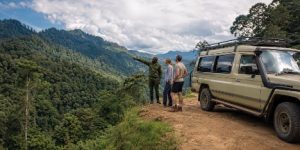
A private four-wheel-drive vehicle with an experienced driver-guide is the most convenient option. Roads near the park can be steep, narrow and slippery. A driver familiar with the four sectors understands realistic journey times and can respond to weather-related changes.
Self-drive visitors should use a capable vehicle, download offline maps and confirm directions with their lodge. Navigation applications sometimes select roads that are technically present but unsuitable after rain. Fuel should be purchased in larger towns such as Kabale, Kisoro or Kihihi rather than waiting until the tank is nearly empty.
Motorcycle taxis operate around local settlements but are not ideal for long-distance transfers with luggage. Public minibuses are inexpensive but follow flexible schedules and may not reach remote properties. Walking is pleasant within villages and lodge areas during daylight, although visitors should ask about terrain, distance and local safety before setting out alone.
Avoid driving at night. Roads may have unmarked bends, pedestrians, cyclists, livestock, fog and damaged sections. Plan to reach the lodge before sunset.
Where to Stay
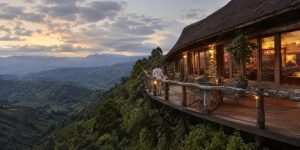
The best accommodation is not necessarily the most luxurious property; it is the lodge located near the sector named on the gorilla permit. Staying in the wrong region can lead to an exhausting predawn drive or even a missed briefing. Always confirm both the lodge and permit sector before making non-refundable payments.
Luxury Accommodation
Sanctuary Gorilla Forest Camp is an intimate high-end camp near the Buhoma trailhead. Its forest-edge setting, refined tents and personalised service suit honeymooners and visitors wanting to be close to the northern briefing point.
Bwindi Lodge by Volcanoes Safaris overlooks the forest near Buhoma. It combines comfortable bandas, strong guiding traditions and a peaceful setting suitable for couples and conservation-minded luxury travellers.
Mahogany Springs Lodge stands beside the Munyaga River near Buhoma. Spacious suites, gardens and easy access to the park headquarters make it convenient for guests who value privacy without being isolated from activities.
Gorilla Forest Lodge offers an upscale forest experience in the Buhoma region. Travellers should check its current branding, room categories and operating arrangements when booking because lodge ownership and management can evolve.
Clouds Mountain Gorilla Lodge occupies a high ridge near Nkuringo. Its views, large cottages and secluded atmosphere suit honeymooners and travellers prepared for the southern sector’s steep terrain.
Nkuringo Bwindi Gorilla Lodge offers commanding highland views and access to Nkuringo activities. Its cottages and attentive service make it a strong choice for active travellers who still want substantial comfort.
Midrange Accommodation
Buhoma Lodge provides comfortable rooms close to the Buhoma briefing centre. The location reduces morning transfer stress and works well for guests who prefer a traditional safari-lodge atmosphere.
Engagi Lodge overlooks the forest near Buhoma and provides spacious cottages with a relaxed setting. It is suitable for travellers who want dependable comfort without the highest luxury pricing.
Silverback Lodge is positioned above the Buhoma valley with forest views and convenient access to the trailhead. It appeals to couples, small groups and visitors combining trekking with community activities.
Bakiga Lodge serves the Ruhija sector and supports community-oriented initiatives. It is a practical base for gorilla trekking and birding in eastern Bwindi.
Gorilla Mist Camp is another convenient Ruhija option, offering straightforward accommodation close to the trekking area. It suits birders and guests prioritising location.
Ichumbi Gorilla Lodge operates near the Rushaga sector and offers comfortable cottages with access to the southern trailhead. It works well for standard gorilla treks and habituation experiences.
Gorilla Valley Lodge is located near Rushaga, with cottages overlooking forested landscapes. It is often selected for its proximity to the briefing point.
Budget Accommodation
Buhoma Community Rest Camp offers simple accommodation near the northern park entrance. It is valuable for budget travellers who want to keep transfer costs low while supporting a community-linked enterprise.
Broadbill Forest Camp serves the Ruhija region with rustic tents or cottages in a natural setting. It appeals to birders, students and adventurous visitors comfortable with simple facilities.
Rushaga Gorilla Camp’s simpler room categories may suit travellers seeking value close to the southern trailhead. Guests should compare current room types because camps sometimes offer several comfort levels.
Wagtail Eco Safari Camp and locally operated guesthouses around Rubuguri can provide economical access to the southern sectors. Visitors should confirm hot water, electricity, meal availability and exact driving time to the UWA briefing point.
Food and Drink
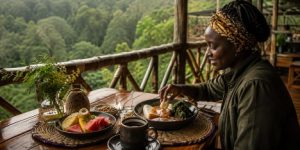
Meals around Bwindi are usually served at lodges because settlements have relatively few independent restaurants. Breakfast may include eggs, fruit, bread, tea and coffee. Lunch is often packed for trekkers, while dinner may combine Ugandan dishes with international safari-lodge cooking.
Local foods include matooke, a steamed green banana staple; groundnut sauce; beans; sweet potatoes; cassava; rice; millet bread; fresh vegetables and chicken or goat stew. Rolex—a rolled chapati filled with eggs and vegetables—is more common in towns but makes an enjoyable road-trip snack when freshly prepared.
Coffee is central to the surrounding highlands. A community coffee tour can demonstrate the journey from berry to cup and gives visitors a clearer understanding of the labour behind Uganda’s coffee industry. Locally grown tea and spiced African tea are also widely available.
Vegetarian meals are generally easy to arrange. Vegan, gluten-free, halal and medically restricted diets require advance communication, especially at remote lodges where ingredients arrive only periodically. Visitors should explain allergies clearly rather than assuming “no dairy” or “no nuts” will be understood in the same way everywhere.
Drink treated, boiled or sealed bottled water. A refillable bottle is useful where lodges provide filtered water, reducing dependence on single-use plastic.
Culture and Local Experiences
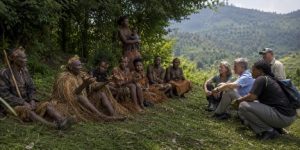
Bakiga communities form a large part of the population around Bwindi. Their highland farming traditions are visible in terraced fields planted with bananas, beans, sorghum, potatoes and vegetables. Music, energetic dance, storytelling, food preparation and craftwork can all form part of a community visit.
Batwa people have a distinct relationship with the forest. Their ancestors depended on forest resources before the creation of protected areas restricted access and changed their way of life. A responsible Batwa experience should therefore go beyond demonstrations of hunting or fire-making. It should acknowledge displacement, present-day aspirations, education, land questions and the community’s continuing cultural identity.
Visitors can join cooking demonstrations, coffee tours, basket-weaving workshops, guided village walks and cultural performances. Ask how much of the fee reaches participants and whether the community manages the programme. Ethical tourism is not merely paying to observe people; it is creating an exchange in which local hosts retain agency.
English is widely used in tourism, while Rukiga and Rufumbira are common locally. Learning greetings such as “Agandi?” in Rukiga can open conversations, although pronunciation matters less than a respectful effort.
Shopping and Souvenirs
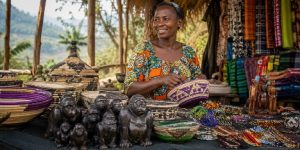
Craft centres near Buhoma, Nkuringo, Rushaga and other settlements sell woven baskets, carved animals, walking sticks, jewellery, fabric goods, paintings and small household items. Coffee, tea and honey can also make useful souvenirs if correctly packaged for international travel.
Buy directly from recognised cooperatives or artisans where possible. This normally leaves more money in the community and provides an opportunity to learn who made the item. Gentle bargaining may be accepted in markets, but aggressive negotiation over a small amount can undermine the purpose of community tourism.
Avoid wildlife products, feathers, skins, ivory, unverified medicinal products and objects made from protected plants. Ask for a receipt when buying higher-value artwork.
Events and Festivals
Bwindi does not have a single large annual festival that defines its tourism calendar. Local events are more likely to be community celebrations, conservation days, school performances, church gatherings, market days and occasional cultural festivals organised at district level.
World Gorilla Day on 24 September and World Wildlife Day on 3 March may inspire conservation activities, educational programmes or public events. Uganda’s Independence Day on 9 October and Christmas and Easter celebrations can bring music, worship and family gatherings to nearby towns.
Event schedules are not always published far in advance. Visitors interested in cultural activities should ask their lodge or local tourism association what will take place during their stay rather than travelling solely for an unconfirmed event.
Family Travel
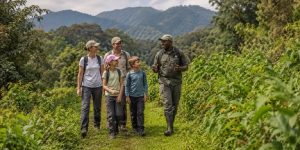
Bwindi can be a rewarding family destination, but gorilla trekking is restricted to visitors aged 15 and above. Families with younger children should plan alternative activities during the trek. These may include guided village walks, short nature experiences outside restricted areas, craft sessions and lodge-based birdwatching. A responsible adult or trusted childcare arrangement must remain with the children.
Family-friendly lodges may offer connected rooms, cottages, flexible meals and space for children. Parents should confirm railings, steep drops, hot-water arrangements and electricity because a remote forest lodge does not function like an urban resort.
Long road journeys can be tiring. Breaking the trip at Lake Mburo, Mbarara, Lake Bunyonyi or Queen Elizabeth National Park makes the experience more comfortable. Carry snacks, water, motion-sickness medication recommended by a clinician and offline entertainment.
Accessibility
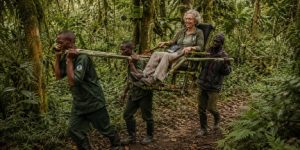
Bwindi’s steep terrain and natural forest paths present real accessibility challenges. Trails may include roots, streams, mud, narrow sections and abrupt slopes. Most park paths do not meet modern wheelchair-accessibility standards, and accessible toilets are limited.
Nevertheless, visitors with reduced mobility may be able to trek with prearranged assistance. Porter teams operate specialised sedan chairs—sometimes called “African helicopters”—that can carry guests through difficult terrain. This service must be organised early and costs extra. The ability to complete a trek still depends on conditions, medical suitability and operational assessment.
Travellers should ask lodges detailed questions about steps, bathroom design, distance from the room to the dining area and vehicle access. “Accessible” can mean different things, so photographs and exact measurements may be helpful. Visitors with hearing, visual or sensory needs should discuss briefing and guide arrangements beforehand.
Safety and Security
Bwindi is generally visited safely through established lodges, licensed tour companies and UWA-managed activities. Rangers accompany visitors inside the forest, and gorilla trekking follows controlled procedures.
Follow ranger instructions at all times. Do not run if a gorilla approaches, stare aggressively at a silverback or imitate gorilla vocalisations unless a ranger directs you. Keep food packed away and never leave litter in the forest.
Road safety is a more common concern than wildlife. Travel during daylight, wear seatbelts and use a well-maintained vehicle. Rain, fog and landslides can disrupt routes. Allow extra time rather than pressuring a driver to speed.
Keep passports, cash and electronics secure, particularly during transfers and in busy towns. Use lodge safes where available and carry only the money needed for the day. Bwindi has little conventional nightlife; evenings are usually spent at lodges.
Official travel advice can change because the wider region lies near international borders. Check current government advisories and consult your operator shortly before departure without assuming that general regional warnings apply equally to every established tourism area.
Health and Medical Information
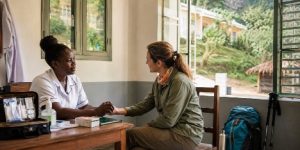
Travellers should consult a travel-health professional several weeks before visiting Uganda. Yellow-fever vaccination documentation is normally required in Uganda’s visa and entry processes. The official immigration system lists a yellow-fever certificate among relevant application documents. Uganda also lies within a malaria-risk region, and a clinician can recommend suitable preventive medication. WHO advises travellers to malaria-endemic areas to seek medical guidance before departure.
Routine vaccinations should be current. Depending on personal health, itinerary and medical advice, travellers may discuss hepatitis A, hepatitis B, typhoid, tetanus, rabies and other vaccines with a qualified clinician.
Respiratory health is particularly important because gorillas can catch infections from humans. Do not attempt to trek with flu-like symptoms, fever, diarrhoea or another contagious illness. Inform the operator or park staff honestly.
Carry prescribed medication, basic first-aid supplies, oral rehydration salts, blister treatment and personal medical information. Comprehensive insurance should cover medical treatment, evacuation and high-value activities such as gorilla trekking.
Small clinics and pharmacies operate in surrounding towns, and Bwindi Community Hospital serves the Buhoma area. Serious conditions may require evacuation to Kabale, Mbarara, Kampala or another major centre.
Entry and Visa Requirements

Foreign visitors need a passport valid for at least six months and must check whether their nationality requires a visa. Uganda uses an online visa application system for visa-prone travellers. A tourist application may require a passport copy, recent photograph, itinerary, accommodation information and supporting documents. The official single-entry tourist visa fee is currently listed as USD 50. Uganda Immigration’s tourist-visa page provides the authoritative requirements.
The East African Tourist Visa, currently listed at USD 100, can cover travel within Uganda, Rwanda and Kenya under its conditions. It should be obtained through the country of first entry, and travellers must verify that their itinerary qualifies. Official East African Tourist Visa requirements include passport, photograph, yellow-fever certificate, return ticket and itinerary.
Use only the official government visa portal or a trusted professional. Unofficial websites may charge excessive processing fees. Requirements can change, so check with Uganda’s Directorate of Citizenship and Immigration Control before travel.
Money and Payments
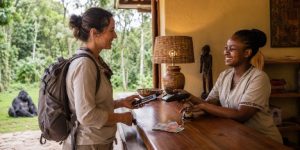
Uganda’s currency is the Uganda shilling. US dollars are widely used for tourism quotations and some permit or lodge payments, but local purchases are generally easier in shillings.
ATMs are available in larger towns such as Kabale, Kisoro and Kihihi but are limited close to remote lodges. Machines may be offline or impose withdrawal limits. Carry sufficient cash for tips, crafts, drinks, porter services and small purchases.
US dollar notes should be clean, undamaged and preferably from recent series because some businesses reject older or marked notes. Cards are accepted at many established lodges, although surcharges and unreliable connections are possible. Mobile money is widely used locally but may be difficult for short-term visitors without a Ugandan account.
Tipping is discretionary but appreciated. Many visitors tip ranger guides, trackers, porters and lodge staff. Ask the operator for current guidance and carry small envelopes or separate notes so contributions can be distributed clearly.
Internet, Electricity and Communication
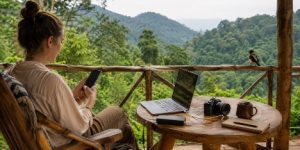
Mobile coverage exists around many settlements and lodges but becomes weak or disappears in valleys and inside the forest. MTN and Airtel are among Uganda’s major networks. Visitors can buy a local SIM or eSIM where eligible, subject to registration requirements.
Most lodges provide Wi-Fi in public areas, but speed and reliability vary. Download permits, maps, booking confirmations and emergency contacts before leaving a major town.
Uganda uses 240-volt, 50-hertz electricity and Type G sockets. Travellers from countries using different plugs should carry an adaptor. Power cuts and solar-energy limitations are possible, particularly at smaller camps. Charge cameras and phones whenever power is available and carry a power bank.
Responsible and Sustainable Travel
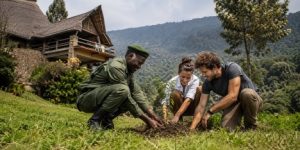
Gorilla tourism survives because strict rules limit pressure on the animals and because permit revenue helps finance conservation. UWA also operates revenue-sharing programmes intended to support communities surrounding protected areas. UWA explains that a portion associated with gorilla permits supports local projects such as livelihoods and tree planting.
Hire local porters, purchase crafts directly, use community guides and choose accommodation employing nearby residents. These decisions turn conservation into an economic asset for households living beside the park.
Carry a reusable bottle, refuse unnecessary plastic, conserve hot water and avoid leaving batteries or electronic waste in remote areas. Stay on authorised trails and never remove plants, stones, feathers or insects.
Ask before photographing people, particularly children. A camera should begin a conversation, not replace one. Never distribute sweets or money casually to children along roads, as this can encourage begging and create tension. Support an established school or community programme instead.
What to Pack
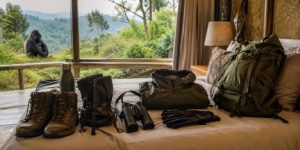
- Passport, visa approval and travel documents
- Printed or downloaded gorilla permit details
- Comfortable waterproof hiking boots with ankle support
- Long hiking trousers
- Long-sleeved shirt
- Lightweight clothing for travel days
- Warm fleece or sweater for cool mornings
- Breathable rain jacket or poncho
- Gardening-style gloves for grasping wet vegetation
- Gaiters or long socks that can cover trouser cuffs
- Hat and sunglasses
- Sunscreen
- Insect repellent
- Reusable water bottle
- Packed-lunch container where supplied
- Personal medication and basic first-aid items
- Camera and moisture protection
- Binoculars
- Spare batteries or memory cards
- Phone charger and power bank
- Type G travel adaptor
- Small waterproof daypack
- Dry bag or zip-lock pouches for valuables
- Walking stick, although lodges or porters can often provide one
- Cash for porters, tips, crafts and incidental expenses
Avoid camouflage-patterned clothing that could be confused with military wear. Bright white garments become muddy quickly, while neutral greens, browns and greys are practical.
Local Etiquette
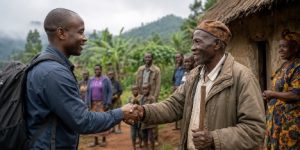
Greetings matter in Ugandan culture. Take a moment to say hello before asking for directions, taking photographs or beginning a transaction. A warm greeting is often interpreted as basic respect rather than unnecessary delay.
Dress modestly during community visits. Safari clothing is acceptable, but very revealing outfits may feel inappropriate in villages, schools, homes and churches.
Always request permission before photographing people. Parents or guardians should approve photographs of children. Do not promise to send pictures unless you genuinely intend to follow through.
Tipping should recognise good service rather than display wealth. Bargain politely in informal markets, but remember that a small difference to a visitor may represent meaningful income to an artisan.
Listen carefully during cultural programmes. Avoid jokes or dismissive remarks about traditional beliefs, rural lifestyles, accents or food. Discussions of politics, ethnicity, land and regional conflict should be approached thoughtfully.
Useful Travel Tips
- Book the gorilla permit before arranging non-refundable flights and accommodation. Once it is confirmed, choose a lodge in the same sector.
- Arrive at Bwindi at least one day before the trek. Road delays or cancelled flights could otherwise cause a missed briefing, and permits are tied to specific dates.
- Hire a porter even if you are fit. The support is valuable on slippery ground and provides direct local income.
- Keep rain gear near the top of the daypack. Weather can change before there is time to unpack everything.
- Carry at least two litres of water and a packed lunch unless the lodge or operator advises differently.
- Protect cameras from humidity and condensation. A dry bag and silica-gel packets are useful.
- Tell rangers honestly about your fitness, injuries or medical conditions. They can sometimes make appropriate group assignments, although the location of gorillas can never be guaranteed.
- Keep digital and paper copies of passports, insurance, permits and important telephone numbers.
Common Mistakes to Avoid
- The most serious planning mistake is booking accommodation in the wrong sector. A traveller holding a Rushaga permit should not assume that a lodge in Buhoma is “inside the same park” and therefore nearby.
- Another mistake is treating Bwindi as a quick excursion from Kampala or Entebbe. The road journey is long, and arriving exhausted reduces enjoyment of the trek.
- Do not underestimate the terrain. Regular walking and hill training before travel can make the day more comfortable. New hiking boots should be broken in before departure.
- Travellers sometimes carry too much camera equipment and too little water. Choose equipment that can be handled quickly in rain and low light.
- Failing to hire a porter is another missed opportunity. Porters assist on difficult ground, protect camera bags and gain valuable income.
- Do not plan a fixed departure time immediately after trekking. Gorilla locations change daily, and the walk could last much longer than expected.
- Finally, do not allow the gorillas to eclipse everything else. Leaving without a forest walk, birding experience or respectful community visit means seeing Bwindi’s most famous residents without understanding the world that sustains them.
Frequently Asked Questions
Is Bwindi safe to visit?
Bwindi’s established tourism areas are generally visited safely when travellers use licensed operators, follow UWA instructions and travel during daylight. Rangers accompany activities inside the forest. Visitors should still check current official travel advice because conditions in the wider border region can change.
How many days should I spend in Bwindi?
Three days and two nights is the practical minimum for arrival, gorilla trekking and departure. Three or four nights provide a better experience by allowing time for birding, a waterfall walk, cultural activities and rest.
What is Bwindi best known for?
Bwindi is best known for its mountain gorillas, ancient rainforest, exceptional biodiversity and Albertine Rift birdlife. It is also recognised internationally as a UNESCO World Heritage Site.
Can I visit Bwindi on a budget?
Yes, but the gorilla permit remains a significant fixed cost. Travellers can reduce other expenses by using budget guesthouses, joining a shared vehicle, travelling by scheduled bus to a nearby town and selecting community activities. Final transfers must still be planned carefully.
Do I need a guide?
A UWA ranger guide is compulsory for gorilla trekking and activities inside the national park. Villages and public areas can be visited independently, but a local guide adds cultural context, supports employment and reduces the risk of entering private land unintentionally.
Is Bwindi suitable for children?
It is suitable for families, but children under 15 cannot trek gorillas. Families should choose accommodation with suitable rooms and arrange alternative supervised activities for younger travellers.
What is the best way to get around?
A private four-wheel-drive vehicle with an experienced driver-guide is the most reliable choice. Self-driving is possible for confident visitors with a suitable vehicle, offline navigation and realistic journey planning.
What should I book in advance?
Book gorilla permits first, followed by accommodation in the correct sector, domestic flights or road transport, porter or accessibility arrangements and specialised birding guides. Peak-season permits and sought-after lodges may sell out many months ahead.